

If you have been trying to conceive, you have probably heard a lot about fertility apps, ovulation trackers, and lifestyle tips. But there is a new wave of technology quietly transforming how couples approach pregnancy — and it goes far beyond basic cycle tracking. Artificial intelligence is now being used to analyze sperm, predict ovulation windows, personalize IVF treatment plans, and even identify viable embryos with a level of precision that was unthinkable just a few years ago.
Whether you are just starting your conception journey or have been trying for some time, understanding AI-powered fertility tools can help you make smarter, more informed decisions. This guide breaks down what these tools actually do, how they work, and what every couple should realistically expect from them in 2026.
What Are AI-Powered Fertility Tools?
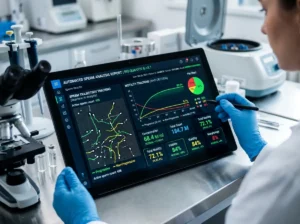
AI-powered fertility tools are technologies that use artificial intelligence and machine learning to collect, analyze, and interpret reproductive health data. Unlike traditional fertility apps that simply log your period dates, these tools process large amounts of biological information — hormone levels, temperature fluctuations, cycle patterns, sperm parameters, and even embryo development images — to generate personalized insights and predictions.
The term covers a wide range of products and medical systems, including:
- Consumer fertility tracking apps and wearables with AI prediction engines
- AI-assisted semen analysis platforms used in fertility clinics
- Machine learning systems for embryo grading in IVF labs
- Personalized IVF dosing tools that recommend medication protocols
In short, AI is being woven into nearly every stage of the fertility and conception journey — from the bedroom to the lab.
How AI Is Changing Fertility Diagnosis
One of the most significant applications of AI in fertility care is in diagnosis — particularly for male infertility, which is often underdiagnosed and undertreated. Research has shown that male factors contribute to roughly half of all infertility cases, yet many men delay getting tested due to stigma or simply not knowing where to start. You can learn more about this in our post on male fertility and sperm health.
AI-Powered Semen Analysis
Traditional semen analysis is performed manually by embryologists or lab technicians — a process that is time-consuming and susceptible to human error. AI-powered Computer-Aided Sperm Analysis (CASA) systems now automate this process, scanning semen samples at a speed and consistency no human eye can match.
These systems assess key parameters including sperm concentration, motility, and morphology based on the latest World Health Organization guidelines. The result is a more objective, reliable evaluation that can catch abnormalities that may have been missed with manual methods.
The STAR System: A Breakthrough for Azoospermia
Perhaps the most remarkable example of AI in fertility medicine is a system developed at Columbia University called STAR — Sperm Tracking and Recovery. Designed for men with azoospermia, a condition where no sperm is detectable in a semen sample, STAR uses AI and microfluidic technology to scan over eight million images in under an hour to locate rare viable sperm cells. The system led to what researchers called the first AI-enabled conception, helping a couple who had been trying for nearly 18 years finally achieve pregnancy. You can read more about this technology at TIME Magazine’s coverage of the STAR breakthrough.
AI Fertility Apps and Wearables

For couples trying to conceive at home, AI has made its way into consumer technology in meaningful ways. The latest generation of fertility apps and wearable devices go beyond recording your last period — they learn from your individual data over time to deliver increasingly accurate predictions.
Smart Cycle Tracking
Apps like Ava, Natural Cycles, and Clue use AI algorithms trained on data from millions of users to identify your unique fertile window. Rather than relying on a generic 28-day cycle model, these tools account for cycle irregularities, hormonal variations, and behavioral patterns. This is especially valuable for women with irregular cycles, for whom standard ovulation calculators are often unreliable. If you are still getting started with ovulation tracking basics, our guide on how to track your ovulation and maximize your chances of conception is a great place to begin.
Wearable Hormone Monitors
Devices like the Mira Fertility Monitor and Tempdrop go a step further by measuring actual hormone levels or continuous basal body temperature throughout the night. The data is then processed by an AI engine that refines its predictions the longer you use it. This type of personalized, continuous data collection offers a much richer picture of your reproductive health than any single test or app log can provide.
At-Home AI Sperm Testing Kits
Male fertility testing has also entered the home market. Devices like YO and Trak use AI-powered analysis to assess sperm motility and concentration from the comfort of home. While these tools do not replace a clinical semen analysis, they can be a useful first step for men who want to understand their fertility before visiting a specialist.
AI in IVF: Smarter Treatment, Better Outcomes
For couples pursuing in vitro fertilization, AI is making the process more precise and personalized. IVF has historically had success rates that plateau at around 30 to 40 percent per cycle, even with significant medical advances. Researchers and fertility clinics are now using AI to push past those numbers.
Embryo Selection and Grading
One of the most critical decisions in an IVF cycle is choosing which embryo to transfer. Traditionally, embryologists make this selection based on visual inspection — a highly skilled but inherently subjective process. AI systems now analyze time-lapse images of developing embryos, tracking thousands of data points to predict which embryos have the highest likelihood of successful implantation. These tools aim to reduce the guesswork and improve live birth rates. The American Society for Reproductive Medicine has highlighted AI embryo selection as one of the most actively researched areas in reproductive medicine today.
Personalized Medication Dosing
AI platforms like Alife Health analyze a patient’s individual data — age, weight, hormone levels, past cycle responses — and generate personalized medication recommendations, including the optimal dosage of follicle-stimulating hormone (FSH) and the best timing for egg retrieval. This removes much of the trial-and-error that characterizes standard IVF protocols and can reduce both over-stimulation risks and failed cycles.
What AI Still Cannot Replace

With all the excitement around AI in fertility care, it is important to keep perspective. These tools are powerful aids — but they work best alongside, not instead of, qualified medical professionals.
The Importance of Human Judgment
AI systems are trained on population-level data, which means they are excellent at identifying patterns across large groups. However, fertility is deeply individual, and there are factors — emotional history, relationship dynamics, complex medical backgrounds, ethical preferences — that no algorithm can fully account for. A compassionate fertility specialist who knows your full story remains irreplaceable.
Accuracy Has Limits
Consumer AI fertility apps, while increasingly sophisticated, are not medical devices and should not be used as a substitute for clinical evaluation. Prediction accuracy varies significantly depending on cycle regularity, user consistency, and the quality of data entered. If you and your partner have been trying to conceive for 12 months or more without success — or 6 months if you are over 35 — it is time to consult a reproductive endocrinologist regardless of what your app says.
Emotional Support Cannot Be Automated
The fertility journey can be emotionally exhausting. Stress, anxiety, and grief are real parts of this experience that no technology can address on its own. Building a support network — whether through a therapist, a fertility support group, or trusted loved ones — is just as important as any tool you use. Our post on how to boost your fertility naturally covers the role of stress management and lifestyle habits that complement any treatment approach.
How to Choose the Right AI Fertility Tool for You
With so many options available, it can feel overwhelming to know where to start. Here are a few practical guidelines to help you navigate the landscape.
Start with Your Goals
If you are early in your journey and simply want better cycle awareness, a smart tracking app or wearable is a logical and affordable first step. If you have already been trying for several months and want to understand potential issues, at-home testing kits for both partners can provide useful initial data before a clinical appointment.
Look for Evidence-Backed Products
Not all fertility apps and devices are created equal. Prioritize products that have published clinical studies supporting their accuracy claims, are cleared or approved by relevant health authorities such as the FDA, and are transparent about how their AI models are trained and updated.
Use Data as a Conversation Starter
The best way to use any AI fertility tool is to bring its outputs to your doctor. Data from a wearable device or at-home semen analysis kit can give your healthcare provider valuable starting points for conversation — and can help you ask better, more targeted questions during consultations.
Understanding your nutritional foundation is also key to supporting your fertility alongside any technology you use. Our detailed guide on nutrition for fertility walks you through the foods that can help optimize your reproductive health from the inside out.
The Future of AI in Fertility Care
The pace of development in this field is remarkable. Researchers are actively exploring AI applications in areas like endometriosis diagnosis, recurrent implantation failure prediction, and even in vitro gametogenesis — a process that could one day allow eggs and sperm to be created from other cell types. For a broader look at where reproductive medicine is headed, the Frontiers in Urology journal has published recent research on how AI is transforming the diagnosis and treatment of male infertility.
What is clear is that AI is not a passing trend in fertility medicine — it is becoming a core part of how conception challenges are understood and addressed. Couples who familiarize themselves with these tools today will be better positioned to navigate their options, advocate for themselves in clinical settings, and make the most of the rapidly expanding resources available to them.
Trying to conceive is one of the most personal journeys a couple can take. AI-powered fertility tools will not make it effortless — but they can make it smarter, more personalized, and a little less uncertain.